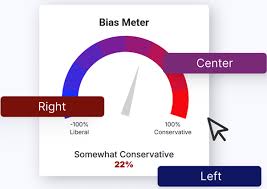
Identifying Left and Right News Outlets
Ever feel overwhelmed by the news cycle, wondering where to turn for unbiased information? You’re not alone. It’s tough to figure out which news outlets lean left and which lean right, especially with so much information flying around.
This guide will help you sort through the noise. We’ll explain how to identify different news leanings, helping you find sources that align with your need for clear, balanced reporting and avoid sensationalism. You’ll learn to critically evaluate news sources, saving you time and reducing frustration.
Key Takeaways
- Recognize common indicators of news outlet bias.
- Understand the characteristics of left-leaning news sources.
- Understand the characteristics of right-leaning news sources.
- Learn how to evaluate news sources for objectivity.
- Discover strategies for consuming news from various perspectives.
- Identify how specific word choices reveal bias.
Understanding News Bias
News bias refers to the perceived slant or prejudice of journalists or news organizations. This slant can influence how stories are reported, what stories are chosen, and how much coverage they receive. It’s important to note that bias doesn’t always mean intentional deception.
Sometimes, it stems from the backgrounds and perspectives of the journalists themselves, or the editorial decisions made by the outlet’s leadership. Recognizing bias helps you become a more informed consumer of news.
Understanding the spectrum of news outlets, from those perceived as left-leaning to those considered right-leaning, is vital for a balanced perspective. It allows you to seek out different viewpoints on important issues. When you understand the common traits of each side, you can better interpret the information presented.
This skill is crucial in today’s media landscape.
What is Left-Leaning Media
Left-leaning media outlets often emphasize social justice, government intervention to solve societal problems, and environmental protection. They tend to focus on issues like income inequality, civil rights, and international cooperation. The tone may highlight systemic issues and advocate for progressive policies.
These outlets often frame stories around the impact of policies on marginalized communities. They might use language that suggests a need for governmental regulation or social reform. Stories about economic disparities often appear, with a focus on the struggles of workers and the less fortunate.
Common Characteristics of Left-Leaning Outlets
- Focus on social justice issues.
- Support for government regulation and social programs.
- Emphasis on environmental protection.
- Coverage of civil rights and minority group concerns.
- Tendency to critique corporate power and wealth inequality.
When you encounter news from these sources, notice the types of stories they prioritize. For example, a left-leaning outlet might lead with a story about a new environmental regulation or a protest for workers’ rights. They may highlight the negative impacts of corporate actions or government policies that they view as harmful to society.
The framing often involves a call for collective action or policy change.
These outlets often report on international affairs with an emphasis on diplomacy and multilateralism. They may be critical of unilateral military action by countries. The framing of global events often involves a concern for humanitarian issues and the well-being of populations worldwide.
This perspective shapes how they cover conflicts and international relations.
What is Right-Leaning Media
Right-leaning media outlets often prioritize individual liberty, free markets, and national security. They tend to focus on issues like economic growth through deregulation, strong national defense, and traditional values. The tone may emphasize personal responsibility and a more limited role for government.
These outlets frequently highlight stories about economic success driven by deregulation or tax cuts. They may frame issues around individual achievement and the importance of self-reliance. Concerns about government overreach and spending are often prominent.
Stories about national security and law and order are also common.
Common Characteristics of Right-Leaning Outlets
- Emphasis on individual liberty and limited government.
- Support for free market principles and deregulation.
- Focus on national security and a strong military.
- Coverage of traditional values and law and order.
- Tendency to critique government spending and bureaucracy.
When consuming news from these sources, pay attention to the types of stories they choose to cover and how they are presented. For instance, a right-leaning outlet might prominently feature a story about a successful business due to tax cuts or a strong stance on border security. They often critique government programs they see as inefficient or wasteful.
The narrative frequently centers on individual responsibility and the benefits of free enterprise.
In international news, right-leaning outlets may emphasize a strong national interest and assertive foreign policy. They often support robust military spending and a more skeptical view of international agreements that might compromise national sovereignty. The framing of global events can focus on threats to national security and the need for decisive action.
How to Identify News Outlet Bias
Identifying bias in news outlets is a skill that improves with practice. It involves looking beyond the headlines and understanding the underlying messages. Several key areas can reveal an outlet’s leaning, from the language used to the stories they choose to cover.
Analyzing Language and Framing
The words chosen by a news outlet can significantly reveal its bias. Certain terms carry emotional weight or imply a particular viewpoint. For example, using “undocumented immigrant” versus “illegal alien” can signal a difference in perspective.
Similarly, describing a group as “freedom fighters” versus “terrorists” indicates a clear stance.
Framing refers to how a story is presented and what aspects are emphasized. A story about a new tax policy could be framed by a left-leaning outlet as a tax break for the wealthy, while a right-leaning outlet might frame it as an incentive for economic growth. Pay attention to the adjectives and adverbs used, as well as the overall narrative structure.
Key Language Indicators
- Use of loaded language.
- Emphasis on specific aspects of a story.
- Tone of reporting (sympathetic, critical, neutral).
- Selection of sources and experts.
Consider how sources are introduced. If an outlet consistently quotes think tanks or organizations with a known ideological bent without providing a counterpoint, it suggests bias. The selection of experts can also reveal bias; for instance, always quoting economists who favor deregulation or those who favor government intervention.
The overall tone of the reporting is another clue. Is the reporting consistently sympathetic to one political party or ideology? Does it express concern for certain groups more than others?
A pattern in tone over time will help you identify an outlet’s general leaning.
Story Selection and Omission
What a news outlet chooses to cover, and what it ignores, is a powerful indicator of bias. If an outlet consistently prioritizes stories that align with a particular agenda, while downplaying or ignoring stories that contradict it, that signals bias.
For example, an outlet that frequently covers stories about government waste but rarely covers stories about corporate malfeasance might lean right. Conversely, an outlet that extensively covers environmental issues but gives little attention to economic growth initiatives might lean left. The absence of certain topics can be as telling as their presence.
The Significance of What’s Covered
- Prioritization of specific issue areas.
- Depth of coverage for particular topics.
- Consistency in reporting themes.
Think about the frequency and prominence of certain types of news. Are climate change stories a daily feature, or do they appear only during major international conferences? Are stories about unemployment rates a constant concern, or are they reported only when they hit historic highs?
The relative emphasis given to different subjects speaks volumes about an outlet’s priorities.
Consider also the depth of coverage. Some stories might be mentioned briefly in a daily rundown, while others are given extensive investigative reports. This difference in depth indicates which topics the outlet deems most important for its audience to understand.
An outlet that thoroughly investigates one side of an issue but only briefly mentions the other is likely biased.
Fact-Checking and Source Verification
A fundamental aspect of identifying bias is assessing the accuracy of reporting. Outlets that consistently present factual errors or misrepresent information may have a bias that affects their journalistic integrity. Reliable news sources are committed to accuracy.
It is also important to consider the sources used. Do they represent a diverse range of perspectives, or do they rely heavily on sources with a known agenda? Fact-checking organizations and media bias rating sites can be valuable tools in this assessment, though it’s always best to cross-reference information from multiple sources.
Tools for Evaluation
- Reputable fact-checking websites.
- Media bias rating organizations.
- Cross-referencing information.
When you encounter a striking claim, it’s wise to see if independent fact-checkers have verified it. Websites like Snopes, PolitiFact, and FactCheck.org can provide valuable insights. These sites often debunk false or misleading claims, giving you a clearer picture of what is factual.
Media bias ratings, such as those provided by Ad Fontes Media or AllSides, can offer a general overview of an outlet’s perceived leaning. However, these are often subjective. Use them as a starting point, but always engage in your own critical analysis.
The most effective approach is to read widely and compare reporting across different outlets.
Comparing News Outlets
To get a well-rounded view, it’s beneficial to compare how different news outlets cover the same event or issue. This comparison highlights subtle differences in framing, emphasis, and even the facts that are presented. By looking at a variety of sources, you can construct a more complete understanding of the news.
Case Study: Coverage of an Economic Policy
Let’s consider how two hypothetical news outlets might cover a new government economic stimulus package. An outlet on the left might focus on how the package will help struggling families and stimulate demand, highlighting provisions for social programs or direct payments to citizens. It might quote economists who argue that government spending is necessary to combat recessionary pressures.
An outlet on the right, however, might focus on the potential for increased national debt or inflation caused by the package. It might emphasize the burden on taxpayers and quote economists who argue that tax cuts or deregulation would be more effective for long-term growth. The framing would likely center on fiscal responsibility and free-market principles.
Hypothetical Coverage Comparison
| Aspect | Left-Leaning Outlet | Right-Leaning Outlet |
|---|---|---|
| Main Focus | Immediate relief, social impact | Long-term debt, economic growth |
| Key Beneficiaries Highlighted | Low-income families, consumers | Businesses, taxpayers |
| Economic Theories Emphasized | Keynesian economics, demand-side | Supply-side economics, fiscal conservatism |
| Potential Downsides Mentioned | Inflation risk, potential for inefficient spending | Increased national debt, potential for government overreach |
This table illustrates how the same event can be presented with vastly different emphases. The left-leaning outlet sees the stimulus as a necessary tool to support people, while the right-leaning outlet views it with concern for fiscal health and individual economic freedom. Both can be factually accurate within their chosen frame, but the overall impression conveyed is quite different.
By reading reports on the same topic from outlets with different leanings, you can identify the nuances and potential biases. You can then synthesize this information to form your own informed opinion, rather than accepting a single narrative.
Utilizing Media Bias Charts
Media bias charts are visual tools that attempt to map various news outlets on a spectrum from left to right, and also rate their reliability or factual accuracy. These charts can be a useful starting point for understanding the general leaning of different sources.
For example, a chart might place outlets like The New York Times and CNN towards the left, while placing Fox News and The Wall Street Journal (opinion section) towards the right. It’s important to remember that these charts are often created by individuals or organizations and can be subjective. They should be used as a guide, not as definitive proof.
Sample Media Bias Chart Data (Illustrative)
- Left-Leaning, High Reliability: Associated Press (AP), Reuters, BBC
- Center-Leaning, High Reliability: Some sections of The New York Times, The Wall Street Journal (news)
- Right-Leaning, High Reliability: Some sections of The Wall Street Journal, The Washington Times
- Leaning Left, Mixed Reliability: CNN, MSNBC
- Leaning Right, Mixed Reliability: Fox News
The distinction between news reporting and opinion pieces is crucial when using these charts. Many outlets have both news sections and opinion sections, and their bias can differ significantly. A news report from a generally right-leaning outlet might be factual and objective, while its opinion page could be strongly partisan.
Always be mindful of whether you are reading news or commentary.
Another consideration is that bias can exist on a micro-level within articles, not just at the outlet level. An outlet might be rated as center-left overall, but a specific article might exhibit a stronger bias due to the author’s perspective or the sources they chose. Therefore, critical reading of individual pieces remains essential.
Strategies for Balanced News Consumption
Achieving a balanced news diet involves actively seeking out diverse perspectives. Relying on a single source, no matter how reputable, can lead to a limited understanding of events. The goal is to gather information from multiple angles to form a well-rounded view.
Diversifying Your News Sources
To avoid echo chambers, make an effort to read news from sources with different ideological leanings. If you primarily read left-leaning outlets, try incorporating some right-leaning ones and vice versa. Also, consider news agencies that aim for neutrality, such as the Associated Press or Reuters.
This approach doesn’t mean agreeing with every viewpoint. It means exposing yourself to different arguments and interpretations. This exposure can challenge your own assumptions and deepen your understanding of complex issues.
It’s like getting a full 360-degree view of a situation.
Recommended Practice
- Read at least one left-leaning, one right-leaning, and one neutral source daily.
- Follow a variety of journalists and commentators on social media (while being mindful of their biases).
- Seek out international news sources for a global perspective.
When you read a story, ask yourself how a different outlet might have covered it. What details might have been included or excluded? What language might have been used?
This comparative thinking is a powerful tool for critical analysis. It helps you see the gaps and slants in any single report.
International news sources can offer particularly valuable insights. They often cover global events from a different cultural and political perspective, free from the domestic partisan debates that can dominate local news. This broader viewpoint can highlight the interconnectedness of global issues and how different nations perceive them.
Recognizing Your Own Biases
It’s important to acknowledge that everyone has biases. Our personal experiences, beliefs, and values shape how we interpret information. Confirmation bias, for example, is the tendency to favor information that confirms our existing beliefs.
Being aware of this can help you guard against it.
When reading a news story, ask yourself: “Am I reacting to this information because it’s true, or because it aligns with what I already believe?” This self-reflection is key to becoming a more objective news consumer. It’s a continuous process of learning and adjustment.
Self-Reflection Questions
- Do I dismiss information that contradicts my views too quickly?
- Am I more likely to believe sources that agree with me?
- Have I actively sought out opposing viewpoints recently?
Engaging with information that challenges your perspective can be uncomfortable, but it is essential for intellectual growth. It forces you to re-examine your assumptions and strengthen your arguments with a broader understanding of the facts. This is how true critical thinking develops.
Consider a time when you changed your mind about an issue. What information or experiences led to that shift? Understanding that process can help you be more open to new information and perspectives in the future, even when it comes from sources you don’t typically trust.
Common Myths Debunked
Myth 1: All news outlets are biased.
While many outlets have a discernible leaning, the degree and nature of bias vary greatly. Some outlets are committed to presenting factual, balanced reporting with minimal slant. Recognizing the difference between slight ideological leanings and outright propaganda is important.
Myth 2: If an outlet uses strong language, it’s automatically biased.
Strong language can sometimes be appropriate for conveying the severity or emotion of a situation. The key is consistency and intent. Bias is often revealed when strong language is used selectively to manipulate emotions or promote a specific agenda rather than to accurately describe an event.
Myth 3: Opinion sections are the same as news reports.
Opinion sections are designed to present commentary, analysis, and personal viewpoints. News reports, on the other hand, are intended to present factual information. While opinion pieces can be valuable for understanding different perspectives, they should not be confused with objective news coverage.
Myth 4: Only overtly political news is biased.
Bias can appear in any type of reporting, including business, technology, or lifestyle news. The selection of stories, the framing of issues, and the sources quoted can all reveal a particular slant, even in seemingly neutral topics. For instance, how a company is portrayed in a business article can reflect an outlet’s overall stance.
Frequently Asked Questions
Question: How can I tell if a news outlet is left or right?
Answer: Look at the language used, the stories they prioritize, the sources they quote, and the overall framing of issues. Many news outlets also have distinct opinion sections that are separate from their news reporting.
Question: Are there any completely unbiased news sources?
Answer: While complete objectivity is difficult to achieve, some news agencies like the Associated Press and Reuters strive for neutrality and accuracy. It’s always best to compare information from multiple sources.
Question: Should I only read news that agrees with my views?
Answer: No, it’s important to read from a variety of sources, even those that challenge your views. This helps you get a more complete picture and understand different perspectives.
Question: What is “fake news”?
Answer: “Fake news” refers to false or misleading information presented as legitimate news, often created to deceive or influence audiences. It’s important to fact-check and verify information before believing or sharing it.
Question: How do social media algorithms affect my news consumption?
Answer: Social media algorithms often show you content similar to what you’ve engaged with before, which can create filter bubbles and limit your exposure to diverse viewpoints. It’s important to actively seek out different news sources.
Conclusion
Figuring out which news outlets are left and right is about recognizing patterns in language, story selection, and framing. By comparing different sources and being aware of your own biases, you can build a more informed perspective. Seek out varied viewpoints to understand issues fully.
This approach empowers you to be a smarter news consumer.

Related Posts

Seeking Unbiased News Sources In A Complex World

Which News Channel Is Unbiased