
Seeking Unbiased News Sources In A Complex World
Have you ever felt overwhelmed by the sheer volume of news, wondering if what you’re reading or watching is telling the whole story? It’s a common feeling. Many people struggle to find news that feels fair and balanced.
This post is designed to help you identify sources that strive for objectivity and understand how to critically evaluate the information you consume. By the end, you’ll have a clearer roadmap to finding news you can trust and feel more confident in your media choices.
Key Takeaways
- Recognize that true neutrality in news is rare, but some sources make a dedicated effort.
- Understand the impact of ownership and funding on news reporting.
- Learn to identify common types of bias, such as framing and omission.
- Develop strategies for cross-referencing information from multiple sources.
- Appreciate the role of media literacy in discerning fact from opinion.
- Explore tools and resources that help assess news source credibility.
Understanding Media Bias
Media bias refers to the tendency of journalists and news organizations to present information in a way that favors a particular viewpoint. This doesn’t always mean intentional deception. Bias can creep in through story selection, the way a story is framed, the sources chosen, and even the language used.
Recognizing these patterns is the first step towards finding news that is more objective. It’s about seeing the subtle influences that can shape our perception of events.
News organizations, like any business, have objectives. These can include attracting a large audience, which might lead to sensationalism, or appealing to a specific demographic, which can introduce a leaning. Even individual reporters, with their unique backgrounds and beliefs, can unintentionally introduce personal biases into their work.
Acknowledging this human element is crucial when evaluating the information presented to you daily.
Types of Bias
Several forms of bias can affect news reporting. These include bias by omission, where important facts are left out; bias by selection of sources, where only one side of an argument is presented; bias by story selection, where certain stories are highlighted while others are ignored; and bias by placement, where stories on the front page or at the top of a broadcast are deemed more important. Another common type is bias by labeling, where a person or group is described using loaded language, and bias by spin, where the story is presented in a way that favors one interpretation over another.
For example, if a news report on a new government policy only interviews supporters of the policy and omits any criticism or potential downsides, that’s bias by selection of sources and omission. Similarly, if a story about a protest focuses heavily on the disruption caused rather than the reasons for the protest, that’s bias by framing. Understanding these distinct types allows you to spot them more easily.
- Bias by omission: Important facts are left out.
- Bias by selection of sources: Only one side of an argument is heard.
- Bias by story selection: Certain stories are prioritized over others.
- Bias by placement: Where a story appears can signal its importance.
- Bias by labeling: Using loaded language to describe people or groups.
- Bias by spin: Presenting facts to favor one interpretation.
Each of these can subtly influence how you perceive an event. For instance, a story about economic changes might highlight job losses in one sector while ignoring job gains in another. This selective reporting shapes public opinion without necessarily presenting a complete picture.
Being aware of these techniques empowers you to look for the missing pieces.
The Role of Ownership and Funding
The ownership and funding of news outlets can significantly influence their reporting. Companies or individuals who own news organizations may have their own agendas or commercial interests that could affect the editorial content. For example, if a media company is owned by a conglomerate with diverse business interests, coverage of regulations affecting those businesses might be slanted.
Advertising revenue also plays a role. News outlets often rely on advertisers for income, and this financial dependence can sometimes lead to cautious reporting on issues that might alienate potential advertisers. This pressure can affect the depth and critical nature of reporting on certain topics.
Understanding who pays the bills for your news is a vital part of assessing its credibility and understanding which news is unbiased.
Consider the case of local newspapers. Many have struggled financially, leading to consolidation or closure. When a few large corporations own multiple local news outlets, there’s a risk of a homogenized news perspective.
This can reduce the diversity of voices and limit the local accountability that independent news sources provide. The financial health of a news organization is directly linked to its ability to conduct independent journalism.
| Funding Source | Potential Influence | Example |
|---|---|---|
| Advertising | May lead to self-censorship to protect ad revenue. | A news site might avoid critical reporting on a major advertiser’s products. |
| Government Grants/Subsidies | Can create pressure for favorable coverage. | A state-funded broadcaster might downplay criticism of government actions. |
| Wealthy Individuals/Foundations | Can impose specific ideological or research agendas. | A foundation funding climate reporting might focus only on certain solutions. |
| Subscription/Membership Models | Allows for editorial independence, but audience preferences can still shape content. | A news service funded by loyal readers might prioritize investigative pieces they value. |
The model of funding for a news organization is a key indicator of its potential for unbiased reporting. Non-profit newsrooms, often funded by donations and grants, can sometimes offer more independence than commercially driven outlets. However, even these can have their own influences to consider, such as the focus of their donors or the mission of the foundation supporting them.
Strategies for Finding Objective News
Finding news that is unbiased requires an active and critical approach. It involves more than just picking a newspaper or watching a particular channel. It means cultivating a habit of questioning, comparing, and seeking out diverse perspectives.
The goal is not to find a single source that is perfectly neutral, but to build a comprehensive understanding from multiple, credible viewpoints.
One of the most effective strategies is cross-referencing information. This means reading about the same event or issue from several different news organizations. Look for major outlets known for their journalistic standards, as well as smaller, independent sources.
By comparing how different outlets report on the same topic, you can often spot areas where bias might be present or where certain details are emphasized or downplayed.
Diversify Your News Diet
Relying on a single news source can lead to a limited understanding of events. To achieve a more balanced view, it is important to consume news from a variety of outlets. This includes sources with different political leanings, national versus international perspectives, and traditional media versus newer digital platforms.
A diverse news diet acts as a natural check and balance on any single source’s potential biases.
For instance, if you primarily read news from one political perspective, you might only hear one side of a complex issue. By also reading from sources with opposing viewpoints, you can gain a more complete picture. This doesn’t mean you have to agree with every perspective, but it helps you understand the different arguments and the evidence presented for each.
This active comparison is key to discernment.
- Read from a range of established national and international news organizations.
- Include sources with different perceived political leanings.
- Explore independent and non-profit journalism outlets.
- Consider publications that focus on specific topics or regions.
- Look at the editorial stances of different newspapers and broadcasters.
For example, when reporting on international conflicts, comparing the coverage from a major Western news agency with that of a news outlet based in the affected region can reveal significant differences in emphasis and framing. This comparative approach is fundamental to understanding the full scope of a global event. It allows you to see how events are interpreted differently based on proximity and perspective.
Fact-Checking and Verification
In an era of rapid information spread, fact-checking is an indispensable tool. Many reputable organizations are dedicated to verifying claims made in the news and by public figures. These fact-checking sites use rigorous methodologies to assess the accuracy of statements, providing readers with reliable information to counter misinformation and disinformation.
When you encounter a surprising claim or a piece of information that seems questionable, take a moment to verify it. Use established fact-checking websites like PolitiFact, FactCheck.org, or Snopes. These sites often provide detailed explanations of their findings, including the evidence they used to debunk or confirm a claim.
This practice not only helps you identify false information but also trains you to be more skeptical of unsubstantiated claims in the future.
- Encounter a claim that seems dubious or overly sensational.
- Search for the claim on a reputable fact-checking website.
- Review the fact-checker’s findings and the evidence they present.
- If the claim is debunked, understand why and look for more accurate information.
- If the claim is confirmed, note the source and its reliability.
A study by the Pew Research Center found that audiences who engage with fact-checking websites are more likely to identify false news stories. This highlights the practical impact of such verification efforts. It demonstrates that actively seeking out accuracy can significantly improve one’s ability to navigate the information landscape.
Media literacy programs often emphasize this crucial step.
Analyze Language and Framing
The way a story is worded and framed can subtly influence your opinion. Pay attention to the adjectives used, the verbs chosen, and the overall tone of the reporting. Loaded language, such as calling a group “radicals” instead of “protesters” or describing a policy as “controversial” without explaining why, can steer your perception.
Consider how different news outlets report on the same political figure. One might be described as a “strong leader” with “bold initiatives,” while another might be called “authoritarian” with “reckless policies.” The facts might be the same, but the descriptive language creates entirely different impressions. Learning to recognize these linguistic cues is essential for uncovering which news is unbiased or at least striving to be.
For example, a news report might frame a debate about climate change as a “scientific dispute” when the vast majority of scientists agree on its causes and impacts. This framing suggests an equal level of debate where one doesn’t truly exist, potentially downplaying the scientific consensus. Similarly, a story about economic hardship might focus on individual responsibility rather than systemic factors, subtly shifting blame.
Tools and Resources for Media Literacy
Fortunately, several resources and tools can assist you in becoming a more discerning news consumer. These resources are designed to help you analyze news content critically and identify potential biases. They range from educational websites to browser extensions that can provide insights into the leanings of various media outlets.
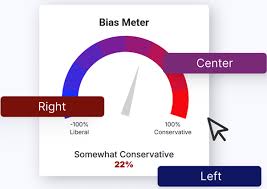
Media bias charts are a popular tool that visually represents the political leaning and factuality of different news sources. These charts can be a helpful starting point for identifying potential biases, though it’s important to remember they are often based on aggregated analysis and may not perfectly reflect every article or report from a given source. They serve as a guide, encouraging further investigation.
Media Bias Charts and Ratings
Websites like Media Bias/Fact Check and AllSides provide ratings and analyses of news sources. These organizations evaluate media outlets based on their political leaning (from left to right) and their reliability or accuracy. While these ratings are a useful guide, they should not be the sole basis for your evaluation.
Different methodologies can lead to different results, and biases can exist within the rating systems themselves.
It’s important to understand that these charts often categorize sources into broad political spectrums. For instance, a source might be labeled “lean left” or “lean right.” Understanding what these labels mean in practice, and recognizing that some sources aim for a more centrist approach while others are overtly partisan, is key to interpreting these ratings effectively. They are meant to inform, not dictate, your media choices.
| Resource Name | Focus | Type of Information Provided |
|---|---|---|
| Media Bias/Fact Check | Assesses political bias and factual reporting. | Detailed analyses of hundreds of news sources, rating their bias and accuracy. |
| AllSides | Presents news from across the political spectrum. | Offers balanced news coverage, bias ratings, and educational resources on media literacy. |
| NewsGuard | Evaluates the credibility of news websites. | Uses trained journalists to rate websites based on criteria like journalistic practices and transparency. |
| Ad Fontes Media | Provides a media bias chart. | Rates news sources on both their bias and their reliability. |
These tools can be particularly helpful when you encounter a news source you are unfamiliar with. They offer a quick way to get an overview of a source’s reputation for objectivity and potential leanings. However, always remember that the ultimate judgment of bias rests on your own critical analysis of the content you consume.
Educational Websites and Courses
Numerous educational organizations and universities offer resources on media literacy. These can include online courses, articles, and guides that teach you how to analyze news critically. Learning about concepts like confirmation bias, logical fallacies, and the economics of news can equip you with the skills to better identify bias and seek out more objective reporting.
Platforms like Coursera, edX, and even the websites of journalism schools often provide free or low-cost courses on media literacy. These courses can be incredibly valuable, breaking down complex topics into manageable lessons. They often feature interactive exercises and case studies that allow you to practice your critical thinking skills in real-world scenarios, helping you understand which news is unbiased.
For example, a course on media literacy might explore how social media algorithms can create “filter bubbles,” where you are primarily shown content that aligns with your existing views. Understanding this phenomenon is crucial for actively seeking out diverse perspectives and avoiding the echo chambers that can reinforce bias. It encourages a more intentional approach to information consumption.
Common Myths Debunked
Myth 1: All news sources have the same level of bias.
While all news sources may exhibit some form of bias, the degree and nature of that bias vary significantly. Some outlets actively strive for objectivity, employing rigorous editorial standards and fact-checking processes. Others may have a clear political agenda or be driven by sensationalism.
Understanding the intent and practices of different organizations is key to distinguishing levels of bias.
Myth 2: If a news source is popular, it must be unbiased.
Popularity does not equate to objectivity. Many highly popular news sources have substantial audiences precisely because they cater to specific viewpoints or present information in a sensationalized manner that attracts attention. A large following simply indicates broad appeal, not necessarily a commitment to unbiased reporting.
Critical evaluation is always necessary, regardless of a source’s reach.
Myth 3: Opinion pieces and news reports are essentially the same.
Opinion pieces, such as editorials and op-eds, are explicitly designed to present a particular viewpoint or argument. News reports, on the other hand, are intended to convey factual information about events. While news reporting can contain bias, its primary goal is to inform based on verifiable facts.
Recognizing the distinction between factual reporting and opinion is fundamental to media literacy.
Myth 4: It’s impossible to find any unbiased news.
While absolute, perfect neutrality may be an unattainable ideal, many news organizations make a sincere effort to present information fairly and accurately. The goal is to identify those sources that demonstrate a commitment to journalistic ethics, present multiple perspectives, and are transparent about their ownership and funding. By using critical evaluation skills, you can find news that is substantially more objective.
Frequently Asked Questions
Question: What is the easiest way to check if a news story is biased?
Answer: The easiest first step is to read the same story from at least two other reputable news sources with different perspectives. If the core facts align but the emphasis or framing differs, you’ve likely encountered bias.
Question: Should I avoid news sources that lean left or right?
Answer: Not necessarily. The goal is to be aware of a source’s leaning and compare it with others. Knowing a source’s perspective helps you interpret its content more critically.
Avoiding all partisan sources might mean missing valuable information or perspectives.
Question: How do I know if a news website is credible?
Answer: Look for transparency about ownership and funding, check if they have clear editorial standards, see if they correct errors, and review their “About Us” page. Reputable sites are open about their operations.
Question: What are some examples of news sources that are generally considered reliable?
Answer: Organizations like the Associated Press (AP), Reuters, BBC News, and NPR are often cited for their commitment to factual reporting, though it’s always wise to cross-reference their work with other sources.
Question: Can social media be a reliable source for unbiased news?
Answer: Social media is generally not a primary source for unbiased news due to algorithms that can create echo chambers and the ease with which misinformation can spread. It’s better to use social media to discover stories and then verify them with trusted news outlets.
Conclusion
Finding which news is unbiased involves active media consumption. Prioritize sources that show transparency, use factual language, and present diverse viewpoints. By cross-referencing information and using media literacy tools, you can build a more accurate understanding of the world.
Stay curious and keep questioning to build your trust in what you read and watch.

Related Posts
Identifying Left and Right News Outlets

Which News Channel Is Unbiased