Which News Network Is The Most Unbiased
In a world flooded with information, it’s easy to feel overwhelmed when trying to get the facts. You might find yourself constantly switching channels or refreshing pages, wondering if you’re truly getting an accurate picture of events. The quest to find which news network is the most unbiased can feel like searching for a needle in a haystack.
This post will guide you through understanding media bias and offer insights to help you identify more neutral news sources, empowering you to make informed decisions about the information you consume.
Key Takeaways
- Understanding media bias is crucial for discerning factual reporting.
- No single news network is perfectly unbiased, but some strive for neutrality more than others.
- Different types of bias, such as partisan or framing bias, influence reporting.
- Tools and strategies exist to help viewers critically evaluate news content.
- Focusing on networks with transparent editorial processes can lead to more balanced information.
- Developing a habit of consuming news from multiple sources improves overall comprehension.
Understanding Media Bias
Media bias refers to the tendency of journalists and news organizations to present stories in a way that favors a particular viewpoint or agenda. This bias can manifest in various forms, influencing what stories are covered, how they are framed, and the language used to describe them. Recognizing these patterns is the first step in identifying which news network is the most unbiased, or at least aims to be.
Types of Media Bias
Several types of bias can subtly or overtly affect news reporting. These aren’t always intentional, but they shape how audiences perceive events.
One common form is partisan bias, where a news outlet consistently supports the political party or ideology it aligns with. This can lead to selective reporting, emphasizing stories that cast one party in a positive light and the other in a negative one.
Framing bias occurs when a story is presented in a specific context or angle that influences how the audience interprets it. For example, a protest could be framed as a “disruption” or a “call for change,” each leading to a different perception.
Gatekeeping bias is when news outlets decide which stories are important enough to cover and which are not. This can lead to significant events being overlooked if they don’t fit the outlet’s narrative.
Sensationalism is another bias, focusing on dramatic or exciting aspects of a story to attract viewers, often at the expense of accuracy or depth. This can make events seem more extreme than they are.
The Impact of Bias on Viewers
When viewers consistently consume news from a single source with a strong bias, their perception of reality can become skewed. They may develop a narrow view of complex issues, making it difficult to engage in productive dialogue or understand opposing viewpoints. This creates echo chambers where pre-existing beliefs are reinforced, and alternative perspectives are dismissed.
For instance, if a news network consistently portrays one political candidate in a highly positive light while highlighting the flaws of another, a viewer relying solely on that network might form an overly favorable opinion of the first candidate, regardless of their actual record.
This lack of diverse information can hinder critical thinking and lead to polarization. People become less able to distinguish fact from opinion and more susceptible to misinformation. Therefore, understanding the different forms of bias is essential when evaluating which news network is the most unbiased.
Evaluating News Networks for Unbiased Reporting
Determining which news network is the most unbiased requires a critical look at their content, editorial policies, and historical reporting. There’s no perfect solution, as every organization has some inherent perspective, but some work harder to present balanced views.
Methods for Assessing Bias
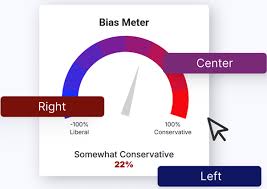
One effective method is to use media bias charts. These charts, often compiled by independent organizations, analyze news sources based on their political leaning and factual reporting. They provide a visual representation of where different networks fall on a spectrum from liberal to conservative and from factual to less factual.
Another approach is to directly examine the reporting of a news network. Does it present multiple sides of an issue? Does it rely on anonymous sources frequently?
Does it fact-check its own reporting and correct errors transparently? The answers to these questions can reveal a lot about an outlet’s commitment to unbiased reporting.
For example, a network that consistently features interviews with experts from various fields, presents data from multiple studies, and allows for robust debate among its commentators is more likely to be striving for neutrality. Conversely, a network that primarily hosts guests who echo a single viewpoint and rarely challenges its own narratives may be exhibiting a stronger bias.
Factors Indicating Potential Unbias
Several factors can suggest a news network is making a genuine effort to be unbiased. These include a commitment to journalistic ethics, a clear corrections policy, and a diverse range of voices in their reporting.
A network that transparently states its editorial standards and holds itself accountable for adhering to them is a good sign. This means they have guidelines for fact-checking, source verification, and avoiding conflicts of interest.
For instance, the Associated Press (AP) is often cited for its commitment to objective reporting. Its stylebook emphasizes accuracy, neutrality, and fairness. While the AP is a news agency that supplies content to many outlets, its own reporting is considered a benchmark for unbiased journalism.
Similarly, Reuters, another international news agency, also has a strong reputation for impartial news gathering and reporting. They aim to provide factual accounts of events without adopting a political stance.
Networks that regularly feature reporting from both the left and the right of the political spectrum, allowing these perspectives to be heard and debated, are also strong contenders. This doesn’t mean they present false equivalencies, but rather that they acknowledge different viewpoints exist and are relevant to the story.
Examples of Networks with Different Bias Levels
News networks often fall into distinct categories based on their perceived bias. Some are known for their progressive leanings, others for their conservative viewpoints, and a few aim for a more centrist approach.
For example, networks that consistently offer critical analysis of conservative policies and often feature progressive commentators might be seen as having a liberal bias. On the other hand, those that frequently defend conservative policies and provide platforms for conservative voices might be perceived as having a conservative bias.
Networks that try to present a balance of viewpoints, avoid overtly partisan language, and focus on factual reporting are often considered more centrist. However, even these networks can face criticism for their framing or selection of stories.
It’s important to remember that bias is not always a black and white issue. A network might be factually accurate but still have a framing bias that influences interpretation. Therefore, looking at multiple aspects of their reporting is key.
Strategies for Consuming Unbiased News
Finding which news network is the most unbiased is challenging, but adopting smart consumption strategies can significantly improve the quality of information you receive. The goal is not to find a single perfect source but to build a diverse and critical approach to news.
Diversifying Your News Sources
The most effective strategy is to consume news from a variety of sources. This means looking at outlets from across the political spectrum, as well as international news organizations.
For instance, if you typically watch a news channel with a perceived liberal slant, make a point to also watch a channel with a perceived conservative slant. Read articles from different newspapers and websites. This allows you to compare how the same event is covered by different outlets and identify areas of agreement and disagreement.
This practice helps you identify what might be objective reporting versus what could be partisan opinion. It encourages you to think critically about the information presented.
For example, a major international event might be covered with a focus on its impact on global markets by one network, while another might focus on the humanitarian aspect. A third might emphasize the political implications for different countries. By seeing all these angles, you get a more complete picture.
Fact-Checking and Verification
Always fact-check claims, especially those that seem surprising or emotionally charged. There are numerous reputable fact-checking websites dedicated to verifying the accuracy of news stories and political claims.
If you read or hear something that raises a red flag, pause before accepting it as truth. Look for corroborating information from other trusted sources. Does the same statistic appear in reports from multiple news organizations?
Are the same facts cited by experts with different affiliations?
Consider the source of any statistic. A statistic presented without context or attributed to an unreliable source should be treated with skepticism. For example, a claim about economic growth might be true, but if it’s presented by a campaign strategist without supporting data from an independent economic body, it warrants further investigation.
Fact-checking sites like Snopes, PolitiFact, and FactCheck.org can be invaluable resources. They investigate specific claims and provide detailed explanations of their findings.
Recognizing Your Own Biases
Everyone has cognitive biases that can influence how they interpret information. Confirmation bias, for example, is the tendency to favor information that confirms your existing beliefs.
Being aware of your own predispositions is crucial. Ask yourself why you might be drawn to a particular news story or perspective. Are you more likely to believe information that aligns with your political views, even if it’s not fully substantiated?
Practicing intellectual humility is key. Be open to the possibility that your current beliefs might be incomplete or incorrect. This mental flexibility allows you to engage with information more objectively.
When you encounter a story that challenges your views, try to understand the reasoning behind the opposing perspective before dismissing it. This doesn’t mean you have to agree with it, but understanding it is a vital part of critical thinking.
Common Myths Debunked
Myth 1: There is one single news network that is perfectly unbiased
The reality is that perfect objectivity is an ideal that is incredibly difficult to achieve in news reporting. Every organization and individual journalist brings their own experiences, perspectives, and editorial decisions to the table. While some networks strive for neutrality more than others, claiming any single one is completely free of bias is an oversimplification.
Different news outlets may prioritize different stories or frame them in ways that reflect their audience or ownership, even with the best intentions.
Myth 2: All news networks have an equal amount of bias
This is not true. While bias is pervasive, the degree and type of bias can vary significantly between news networks. Some outlets are explicitly partisan, while others make a concerted effort to present balanced reporting.
Tools and analyses exist that quantify and categorize bias, demonstrating that there is a spectrum of bias rather than a uniform distribution. For example, investigative journalism by media watchdogs often reveals clear differences in how networks cover political events or social issues.
Myth 3: If a news network doesn’t report on a topic, it’s not important
This myth relates to gatekeeping bias. News networks decide which stories are newsworthy, and their choices can be influenced by various factors, including their audience, advertiser interests, or editorial agenda. If a story isn’t covered, it doesn’t necessarily mean it lacks importance; it might simply not align with the network’s priorities or narrative.
It is crucial to seek out information from diverse sources to ensure a comprehensive understanding of events.
Myth 4: Opinion shows and news reporting are the same
This is a common misconception that blurs the lines between editorial content and factual reporting. News reporting aims to present objective facts and cover events neutrally. Opinion shows, whether on news networks or other platforms, are designed to express viewpoints and persuade audiences.
While opinion shows can be informative and engaging, they should not be mistaken for unbiased news coverage. Responsible news organizations clearly distinguish between news segments and opinion programming, but viewers must also be diligent in making this distinction themselves.
Frequently Asked Questions
Question: How can I tell if a news network is biased
Answer: Look for consistent patterns in story selection and framing. Do they favor one political party? Do they use emotionally charged language?
Comparing their coverage to other sources is also a good indicator.
Question: Are there any news networks that are completely unbiased
Answer: While many networks strive for objectivity, achieving perfect unbiasedness is practically impossible due to human perspectives and editorial choices. It’s more realistic to look for networks that demonstrate a strong commitment to fairness and accuracy.
Question: Should I only watch news channels that align with my political views
Answer: No, it is highly recommended to watch news from a variety of sources, including those with different political viewpoints. This helps you get a more balanced understanding of issues and identify potential biases in any single source.
Question: What is media framing bias
Answer: Framing bias is when a news story is presented in a way that influences how the audience interprets it. For example, framing a protest as a “riot” versus a “demonstration” changes the perceived meaning.
Question: How do media bias charts help
Answer: Media bias charts visually map out news sources based on their political leaning and factual accuracy. They can provide a helpful starting point for understanding the general bias of different networks and publications.
Conclusion
Finding which news network is the most unbiased requires an active and critical approach. No single source is perfect. Diversify your news intake, fact-check diligently, and be aware of your own viewpoints.
This practice builds a stronger understanding of the world.


Related Posts
Identifying Left and Right News Outlets

Seeking Unbiased News Sources In A Complex World