Identifying Unbiased News Sources Today
Are you tired of feeling like you’re being fed a particular viewpoint every time you turn on the news? It’s a common frustration in our fast-paced world. Many of us simply want the facts presented clearly so we can form our own opinions. This guide is here to help you find out what news sources are unbiased and how to identify them. You’ll learn practical strategies to evaluate information critically and build a more balanced understanding of current events, saving you time and reducing confusion.
Key Takeaways
- Recognizing bias involves understanding how news is reported.
- Different news organizations have different editorial standards and goals.
- Several methods exist to check the accuracy and fairness of news stories.
- Diversifying your news intake is key to a balanced perspective.
- Tools and resources can help you assess news source credibility.
Understanding News Bias
News bias is the tendency for journalists and news organizations to present information in a way that favors a particular perspective, ideology, or group. This can happen intentionally or unintentionally. It’s not always about outright lies, but often about what stories are chosen, how they are framed, and what information is included or left out. Understanding bias helps you see beyond the surface of a news report and consider the underlying influences.
Types of Bias
- Selection Bias This occurs when a news outlet chooses to report on certain stories while ignoring others. For example, a station might consistently cover stories that paint a specific political party in a negative light, while downplaying positive developments for that same party. This selective reporting shapes the audience’s perception of reality by presenting an incomplete picture. It can lead people to believe that only certain issues are important or that certain events are more prevalent than they actually are.
- Story Selection Bias This is a subtle form of bias where a news outlet might choose a particular angle to present a story. Instead of just reporting an event, they might focus on the emotional impact, the financial cost, or the political implications, depending on their agenda. For instance, a story about a new government policy could be framed around its potential job losses (negative angle) or its potential economic growth (positive angle). The choice of framing can significantly influence how the audience feels about the issue.
- Placement Bias News organizations often decide where to place stories. Front-page stories or leading television segments are considered more important and get more attention. If a news outlet consistently places stories that support its agenda at the top and buries opposing viewpoints, this is placement bias. For example, a major positive story about a company might be a front-page headline, while a smaller article detailing a scandal could be tucked away on an inner page.
- Spin Bias Spin involves presenting information in a way that makes it sound more favorable or unfavorable than it might objectively be. This can include using loaded language, emphasizing certain facts while omitting others, or exaggerating consequences. For example, a tax increase might be described as a “burden on hardworking families” or an “investment in public services.” The choice of words significantly colors the reader’s perception without necessarily fabricating facts.
- Misleading Statistics Bias This happens when statistics are presented in a way that distorts the truth. This could involve using incomplete data, comparing unrelated numbers, or presenting percentages without context. For instance, saying “crime has increased by 50%” without stating the baseline or the specific type of crime can be misleading if the baseline was very low. It exploits people’s trust in numbers to create a false impression.
Why Does Bias Exist
News bias exists for several interconnected reasons. Economic pressures often play a significant role. Media companies are businesses that need to attract and retain audiences to generate advertising revenue. This can lead to prioritizing sensationalism or stories that align with the perceived preferences of their target demographic, rather than purely objective reporting.
Political leanings of owners, editors, and journalists can also influence coverage. While professional journalists strive for objectivity, their personal beliefs can subtly seep into their work. This isn’t always malicious; it can manifest in the choice of sources interviewed, the questions asked, or the emphasis placed on certain aspects of a story.
The desire to break news first can also contribute to bias. In a competitive media landscape, speed can sometimes come at the expense of thoroughness and verification. This can lead to the premature reporting of unconfirmed details or the adoption of prevailing narratives before all facts are in.
Audience preferences are another factor. News organizations may cater to what they believe their audience wants to hear, which can reinforce existing beliefs and create echo chambers. This feedback loop can make it difficult for genuinely unbiased reporting to gain traction if it challenges the audience’s established viewpoints.
Identifying What News Sources Are Unbiased
Determining whether a news source is truly unbiased is a challenging but achievable goal. It requires a critical mindset and a willingness to look beyond the headlines. No single source is perfectly neutral, but some strive for a higher degree of fairness and accuracy.
Fact-Checking and Verification
Fact-checking is a cornerstone of identifying credible news. Reputable news organizations will cite their sources and be transparent about their reporting process. When a news outlet consistently presents verifiable facts and corrects errors promptly, it indicates a commitment to accuracy.
- Cross-Reference Stories Check if other news outlets are reporting the same information. If a story appears on only one platform and lacks corroboration from diverse sources, it warrants skepticism. Major news events are usually covered by multiple organizations, providing opportunities for comparison.
- Verify Sources Look for news reports that clearly identify their sources. Are they experts, official spokespeople, or anonymous individuals? Be wary of reports that rely heavily on unnamed sources without explanation, as this can be a tactic to hide bias or unsubstantiated claims.
- Examine Evidence News should be backed by evidence. This could be data, documents, eyewitness accounts, or expert opinions. If a report makes strong claims without providing supporting evidence, its reliability is questionable.
- Check Corrections Policies A strong indicator of a commitment to accuracy is a clear and accessible corrections policy. Most reputable news organizations will acknowledge and correct mistakes. If a site doesn’t have such a policy or makes it difficult to find, it suggests a lack of accountability.
Media Bias Charts and Ratings
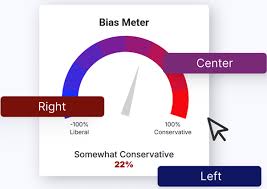
Various organizations analyze news sources for bias. These charts can offer a quick visual guide to the political leanings and factual reporting of different outlets. While not definitive, they provide a useful starting point for evaluating sources.
- How to Use Media Bias Charts These charts often rate news sources on a spectrum from liberal to conservative bias, as well as on a scale of factual reporting. They are typically compiled through a combination of content analysis, linguistic analysis, and expert reviews. Understanding the methodology behind a chart can help you interpret its ratings more effectively.
- Limitations of Ratings It is important to remember that these charts are based on analyses and can have their own biases. They are tools to aid your judgment, not definitive pronouncements. A source rated as having a slight bias doesn’t mean it’s untrustworthy, but it signals that you should be aware of potential framing.
Key Characteristics of Less Biased News
- Neutral Language A truly unbiased news source will use objective language. It avoids loaded terms, emotional appeals, and sensationalism. For example, instead of saying “radical protesters stormed the building,” a neutral report might say “demonstrators entered the building.”
- Balanced Reporting Balanced reporting means presenting multiple sides of an issue fairly. It doesn’t necessarily mean giving equal weight to all viewpoints if one viewpoint is demonstrably false or harmful, but it involves exploring different perspectives without undue favoritism.
- Focus on Facts Unbiased reporting prioritizes facts over opinions or commentary. While opinion pieces have their place, they should be clearly distinguished from news reporting. A reliable news source will ensure its factual reporting is accurate and thoroughly researched.
- Transparency about Funding and Ownership Transparency about who owns and funds a news organization can provide insight into potential influences. Knowing the affiliations of a media outlet can help readers understand its broader agenda, if any.
Strategies for Consuming News Critically
Developing critical consumption habits is essential for navigating the modern media landscape. It’s not just about finding unbiased sources, but also about how you engage with the information presented to you.
Diversify Your News Diet
Relying on a single news source can significantly skew your perspective. Actively seeking out information from a variety of outlets is one of the most effective ways to gain a more comprehensive and balanced understanding of events.
- Read Across the Spectrum Expose yourself to news from sources with different editorial stances. This doesn’t mean agreeing with them, but rather seeing how the same events are covered by outlets with varying viewpoints. This comparative approach highlights what might be emphasized or omitted by a single source.
- Include Local and International News Do not forget local and international news. Local news provides context for your community, while international news offers a global perspective on events. These different scopes can reveal connections and implications that might not be apparent from national news alone.
- Seek Out Different Formats News comes in many forms: articles, documentaries, podcasts, and analyses. Engaging with these different formats can offer deeper insights and present information in ways that resonate with your learning style. Documentaries, for example, can provide in-depth context that a short news article cannot.
Recognizing Your Own Biases
Everyone has their own set of beliefs and prejudices, known as cognitive biases. Being aware of your own biases is crucial for evaluating news objectively. Confirmation bias, for instance, is the tendency to favor information that confirms your existing beliefs.
- Understand Confirmation Bias This bias can lead you to uncritically accept news that aligns with your views while dismissing information that contradicts them. Recognizing when you are doing this is the first step to overcoming it. Ask yourself if you are truly evaluating the information or just looking for validation.
- Be Mindful of Emotional Responses Strong emotional reactions to a news story can be a sign that your biases are being triggered. Instead of reacting immediately, take a step back and analyze why the story affected you that way. Is it based on facts or on your pre-existing feelings?
- Seek Out Diverse Opinions Engage with people who hold different views. Discussing news and current events with individuals from varied backgrounds can expose you to perspectives you might not have considered, helping to challenge your own assumptions.
Fact-Checking Tools and Resources
Fortunately, several dedicated fact-checking organizations exist to help you verify information. These groups are committed to debunking misinformation and providing evidence-based analysis.
- Reputable Fact-Checking Websites Websites like Snopes, PolitiFact, and FactCheck.org are invaluable resources. They investigate claims made in the media, politics, and social media, providing clear explanations and evidence for their findings. Many also have browser extensions or apps for easy access.
- How to Use Fact-Checks Effectively When you encounter a claim that seems dubious, use these sites to check its veracity. Look for their detailed reports, which often include links to original sources and expert opinions. This helps you learn the process of fact-checking yourself.
Examples of News Bias in Action
Illustrating news bias with real-world examples can make the concept clearer and more tangible. These scenarios show how framing and selective reporting can influence public perception.
Case Study 1 The Economic Debate
Consider a debate over a proposed tax cut. One news outlet, known for its pro-business stance, might highlight how the tax cut will stimulate investment and create jobs. Their reporting would focus on optimistic economic forecasts and testimonials from business leaders.
- Framing as Economic Growth The news report emphasizes terms like “economic stimulus,” “job creation,” and “investment incentives.” It might feature interviews with CEOs who express enthusiasm about the potential benefits.
- Omission of Counterarguments Crucial details about potential increases in national debt, impacts on social services due to reduced government revenue, or arguments from economists predicting inflation might be downplayed or omitted entirely.
- Emotional Appeal The report might use images of bustling factories or smiling entrepreneurs to create a positive emotional association with the tax cut.
In contrast, another news outlet, with a more progressive editorial line, might focus on the potential negative consequences. Their reporting could highlight concerns about increased income inequality, the burden on taxpayers, and the impact on essential public services that could face funding cuts.
- Framing as Wealth Redistribution The news report might use terms like “tax loopholes for the rich,” “austerity measures,” and “cuts to vital programs.” It could feature interviews with labor unions or community organizers who express deep concern.
- Emphasis on Social Impact The focus would be on how ordinary citizens might be harmed by reduced government spending on education, healthcare, or infrastructure.
- Statistics of Inequality They might present statistics on wealth disparity to support the argument that the tax cut primarily benefits the wealthy.
Both outlets are reporting on the same event, but their chosen angles, emphasis, and omitted information create vastly different impressions for their audiences. Neither may be outright lying, but the bias in selection and framing is evident.
Case Study 2 Reporting on Social Movements
Reporting on protests and social movements often falls victim to bias. The language used can significantly shape public opinion about the participants and their cause.
- Describing Protesters A report might refer to demonstrators as “activists” or “concerned citizens” when describing peaceful protests. However, if the same group engages in property damage, they might be labeled as “rioters” or “agitators,” even if only a small subset is responsible for the actions.
- Focus on Disruption Conversely, a news outlet might highlight instances of traffic disruption or inconvenience caused by a protest, framing the entire event around the negative impact on the general public, rather than the reasons for the protest itself.
- Selective Coverage of Goals News reports might focus on the more extreme demands of a movement, or only on demands that are politically unpopular, thereby undermining the broader objectives of the movement.
This selective reporting can turn public sympathy away from legitimate grievances and toward condemnation of the protesters, regardless of the validity of their cause.
Common Myths Debunked
Myth 1: There are completely unbiased news sources.
The reality is that absolute neutrality is extremely difficult, if not impossible, to achieve in journalism. Every editor and journalist makes choices about what to cover, how to frame it, and which sources to consult. These choices, even when made with good intentions, can introduce subtle biases.
The goal is not to find a source that is 100% unbiased, but one that strives for fairness, accuracy, and transparency.
Myth 2: All mainstream news is inherently biased and untrustworthy.
While mainstream news outlets can and do exhibit bias, it’s not accurate to dismiss them all as untrustworthy. Many established news organizations have strict editorial standards, rigorous fact-checking processes, and a commitment to journalistic integrity. Their reach and resources often allow for in-depth investigative reporting that smaller outlets may not be able to match.
The key is to be a discerning consumer, understanding that bias exists and actively looking for it.
Myth 3: Opinion shows and news reports are the same.
This is a crucial distinction. News reports are intended to present factual information as objectively as possible. Opinion shows, commentary segments, and editorials are designed to express a particular viewpoint or argument.
While they can be informative, they are not a substitute for factual news reporting. Unbiased news sources will clearly differentiate between factual reporting and commentary.
Myth 4: If a news source leans a certain way politically, it’s automatically biased and wrong.
A news source having a political leaning does not automatically mean its reporting is incorrect or intentionally misleading. For example, a conservative publication might consistently report on issues from a conservative perspective, but the facts within those reports can still be accurate. The bias lies in the framing, selection, and emphasis, not necessarily in the falsification of facts.
It means you should be aware of the perspective and cross-reference with other sources.
Frequently Asked Questions
Question: How can I tell if a news story is biased?
Answer: Look for loaded language, one-sided arguments, lack of evidence, and an over-reliance on anonymous sources. Compare the story to reports from other outlets to see if key facts are omitted or misrepresented.
Question: Are all sources that lean liberal or conservative equally biased?
Answer: Not necessarily. The degree and nature of bias can vary greatly. Some sources may present information with a clear lean but still maintain factual accuracy, while others might distort facts to fit an agenda.
It is important to evaluate each source individually.
Question: Is it possible to find a news source that has no bias at all?
Answer: Finding a news source with absolutely zero bias is highly unlikely. The goal is to find sources that are transparent about their perspectives and make a genuine effort to report accurately and fairly, even if a slight lean is present.
Question: Should I only trust news sources that present information neutrally?
Answer: While neutrality is ideal, it is often more practical to seek out sources that are transparent and strive for fairness. A source that acknowledges its perspective and still provides well-researched facts is often more reliable than one that claims absolute neutrality but subtly distorts information.
Question: What is the best way to get unbiased news?
Answer: The best approach is to consume news from a diverse range of sources, including those with different political leanings, and to always fact-check important claims. Developing critical thinking skills is your most powerful tool.
Conclusion
Finding what news sources are unbiased involves a conscious and ongoing effort. It means understanding how bias manifests, utilizing fact-checking tools, and diversifying your information intake. By critically evaluating the information you consume and being aware of your own perceptions, you can build a more informed and balanced view of the world. Start by looking for sources that prioritize accuracy and transparency in their reporting.


Related Posts
Identifying Left and Right News Outlets

Seeking Unbiased News Sources In A Complex World